
The Best Temporary Crown Glues & Cap Adhesives: 2026 Guide
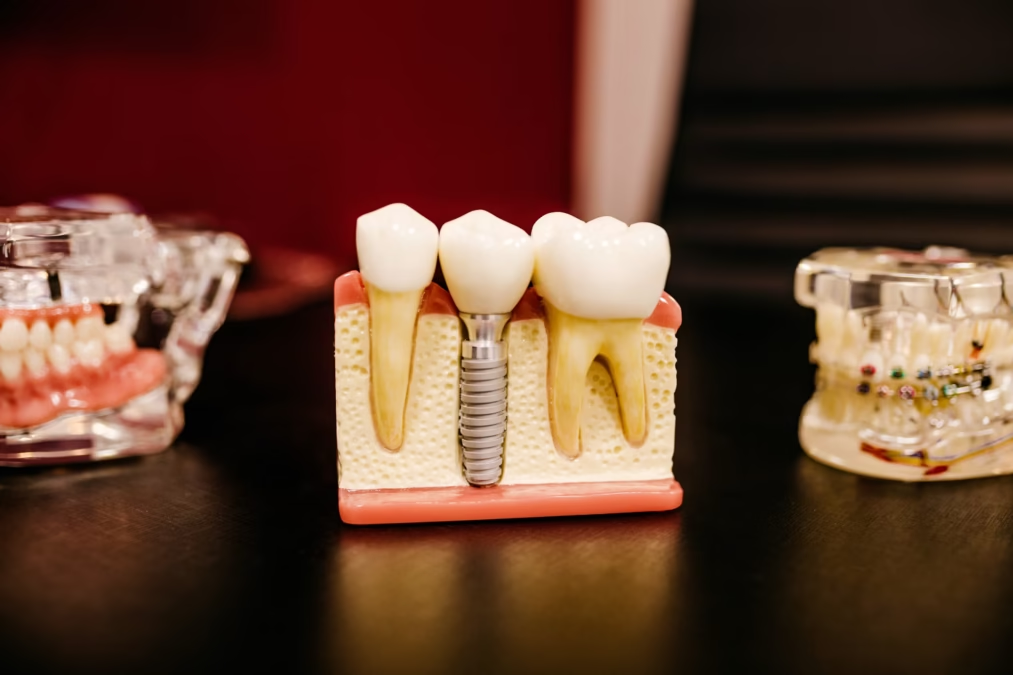
Has your dental crown popped off at the worst possible moment? Whether it happened while chewing dinner, brushing your teeth, or right before a major event, there is no need to panic. If your dental crown, cap, or bridge has dislodged, the safest over-the-counter (OTC) solution is to use an FDA-regulated temporary dental cement (such as a Zinc Oxide Eugenol paste) or a small dab of water-soluble denture adhesive (like Fixodent) to temporarily protect the exposed tooth until you can visit a dentist within 24 to 48 hours. Never use superglue or household craft glues, as they release toxic cyanoacrylate monomers, trigger excruciating chemical nerve inflammation (pulpitis), and permanently destroy your natural tooth structure.
Here is a complete, clinically verified 2026 guide to the top 7 temporary crown glues and dental cap adhesives, how to use them safely at home, and when you must seek professional emergency dental care immediately.
Why Crowns Fall Off in the First Place
Dental crowns are designed to be durable, but they are not indestructible. According to data from the Cleveland Clinic, crowns typically last 5 to 15 years depending on wear, oral hygiene, and chewing habits. Understanding why a crown detached helps determine whether it can be safely reattached at home:
- Luting Cement Breakdown and Washout: Over years of exposure to saliva, acids, and masticatory forces, the microscopic layer of dental cement bonding the crown to the tooth can dissolve or crack, allowing the crown to loosen.
- Recurrent Tooth Decay (Caries) Under the Crown: Bacteria can penetrate microscopic margin gaps, softening the underlying tooth structure until the crown loses mechanical retention.
- Masticatory Trauma and Sticky Foods: Hard candies, ice, or viscous foods (like caramels or toffee) exert strong tensile pulling forces that dislodge crowns.
- Bruxism (Teeth Grinding and Clenching): Chronic nighttime grinding generates heavy lateral shear forces that break the cement seal (PubMed / NIH Clinical Studies).
- Fractured Tooth Preparation or Post: In some cases, the natural tooth stump or an underlying metal/fiber post breaks off inside the crown lumen.
Are At-Home Dental Cap Glues Safe?
Yes—over-the-counter temporary crown glues and dental cap adhesives are safe when used strictly as short-term emergency stopgaps. However, there are fundamental clinical distinctions every patient must understand:
- Temporary Cements Are Only for Short-Term Protection: OTC cements are formulated to provide mild retention for 24 to 72 hours. They are not permanent cements.
- Denture Adhesives Are the Safest Ultra-Short-Term Stopgap: If you can see your dentist within 24 hours, placing a drop of denture cream (e.g., Fixodent) is the safest method because it cushions the tooth with a water-soluble hydrocolloid suction seal that rinses away easily with warm water.
- The Role of Chemistry (Eugenol vs. Non-Eugenol): Zinc Oxide Eugenol (ZOE) cements contain clove oil, which provides an analgesic, soothing effect on sensitive dentin nerves. However, clinical studies published in the National Library of Medicine (PubMed / NIH) indicate that residual eugenol can inhibit the polymerization of permanent composite resin cements. If your permanent crown is all-ceramic or zirconia, inform your dentist if you used a ZOE temporary cement.
- Permanent Cements Must Never Be Used at Home: Professional permanent luting agents (such as Resin-Modified Glass Ionomer or dual-cure resin) require precise clinical isolation and cannot be adjusted at home without high-speed dental drills.
- Household Adhesives Are Strictly Prohibited: Superglue and craft adhesives cause irreversible chemical and thermal nerve death.
Top 7 Temporary Crown Glues & Dental Cap Adhesives (2026)
Here are the 7 most reliable, clinically evaluated temporary dental adhesives and emergency stopgaps you can acquire over the counter or compound at home:
1. Dentemp Cap & Filling Repair (Best Overall ZOE Formula)
- Active Ingredients: Zinc Oxide, Eugenol, Calcium Sulphate, Ethylmethacrylate Polymer.
- Why It’s Great: Dentemp is one of the most widely recognized OTC dental repair products. Its moisture-activated Zinc Oxide Eugenol formula sets quickly upon contact with saliva and delivers immediate soothing relief for sensitive tooth nerves.
- Hold Time: 48 to 72 hours.
- Best For: Intact crowns on vital (living) teeth with mild to moderate temperature sensitivity.
2. Recapit Maximum Hold Temporary Crown Cement (Best Precision Applicator)
- Active Ingredients: Pre-mixed Zinc Oxide and modifier matrix (Eugenol-free option available).
- Why It’s Great: Specifically engineered exclusively for dislodged crowns and caps rather than general cavity fillings. It features a fine-tip applicator tube that dispenses a clean, measured bead directly into the crown lumen without messy spillage.
- Hold Time: 24 to 48 hours.
- Best For: Posterior molars where access is tight and precise dispensing is critical.
3. DenTek Temparin Max Lost Filling & Loose Cap Repair (Best Multi-Use Kit)
- Active Ingredients: Calcium Sulphate, Zinc Oxide, Barium Sulphate.
- Why It’s Great: Widely available at almost every pharmacy and supermarket. Comes with an ergonomic double-ended applicator tool to help scrape and place the material. It cures firmly within 15 minutes.
- Hold Time: 24 to 48 hours.
- Best For: Travel emergency kits and households wanting a reliable, multi-purpose dental backup.
4. Fixodent Ultra / Poligrip Denture Adhesive (Dentist-Recommended 24-Hour Stopgap)
- Active Ingredients: Calcium/Zinc PVM-MA, Carboxymethylcellulose (CMC).
- Why It’s Great: Dentists frequently advise patients to use denture adhesive paste if their appointment is within 24 hours. Because it creates a soft suction seal rather than setting into rigid stone, there is zero risk of locking the crown in a crooked position, and it rinses away completely with warm water.
- Hold Time: 12 to 24 hours (can be reapplied daily).
- Best For: Patients with next-day dental appointments who want the absolute lowest risk of damaging the tooth or crown.
5. Master-Dent / Zone Non-Eugenol Temporary Cement (Best for Resin-Bonded Crowns)
- Active Ingredients: Zinc Oxide with organic fatty acids (100% Eugenol-Free).
- Why It’s Great: Designed to provide stable temporary retention without leaving eugenol residues that could compromise the bonding strength of modern aesthetic zirconia or porcelain crowns.
- Hold Time: 48 to 72 hours.
- Best For: Front cosmetic ceramic teeth and patients known to have clove/eugenol allergies.
6. Pure Zinc Oxide & Clove Oil Compounded Paste (Best Traditional Emergency Option)
- Active Ingredients: USP-grade Zinc Oxide powder mixed with pure pharmaceutical Eugenol (Oil of Cloves).
- Why It’s Great: Available through compounding pharmacies or specialized dental first-aid kits. When mixed into a thick putty consistency, it creates the classic clinical ZOE temporary cement with maximum pulp-sedating power.
- Hold Time: 48 to 72 hours.
- Best For: Remote situations or emergency kits where commercial pre-mixed tubes are unavailable.
7. Petroleum Jelly (Vaseline) / Toothpaste Suction Seal (Best Overnight Home Alternative)
- Active Ingredients: White Petrolatum or standard non-whitening toothpaste.
- Why It’s Great: If your crown falls out late at night and pharmacies are closed, a small smear of Vaseline or standard toothpaste inside the crown creates surface tension/suction to keep the cap seated while shielding exposed dentin from air and saliva.
- Hold Time: Overnight only (8 to 12 hours).
- Best For: Late-night emergencies where no commercial OTC dental products are immediately accessible.
8. Zinc Polycarboxylate Provisional Cement (Best for Biocompatibility & Low Irritation)
- Active Ingredients: Zinc Oxide powder reacted with Polyacrylic Acid.
- Why It’s Great: Polycarboxylate cements feature large polyacrylic acid molecules that cannot penetrate dentin tubules, making them exceptionally gentle on sensitive tooth pulp. They provide strong mechanical adhesion while remaining easy for the dentist to scale away.
- Hold Time: 2 to 4 days.
- Best For: Deeply cut tooth preps close to the pulp chamber where chemical neutrality is required.
9. Pure Zinc Oxide & Clove Oil Compounded Paste (Best Traditional Emergency Option)
- Active Ingredients: USP-grade Zinc Oxide powder mixed with pure pharmaceutical Eugenol (Oil of Cloves).
- Why It’s Great: Available through compounding pharmacies or specialized dental first-aid kits. When mixed into a thick putty consistency, it creates the classic clinical ZOE temporary cement with maximum pulp-sedating power.
- Hold Time: 48 to 72 hours.
- Best For: Remote situations or emergency kits where commercial pre-mixed tubes are unavailable.
10. Petroleum Jelly (Vaseline) / Toothpaste Suction Seal (Best Overnight Home Alternative)
- Active Ingredients: White Petrolatum or standard non-whitening toothpaste.
- Why It’s Great: If your crown falls out late at night and pharmacies are closed, a small smear of Vaseline or standard toothpaste inside the crown creates surface tension/suction to keep the cap seated while shielding exposed dentin from air and saliva.
- Hold Time: Overnight only (8 to 12 hours).
- Best For: Late-night emergencies where no commercial OTC dental products are immediately accessible.
Product Comparison Matrix
| Product / Method | Chemistry Type | Hold Duration | Setting Time | Removal Ease | Best Clinical Use Case |
|---|---|---|---|---|---|
| Dentemp Cap & Filling | Zinc Oxide Eugenol | 2–3 Days | ~15–30 min | Easy (Hand scaler) | Sensitive vital teeth |
| Recapit Crown Cement | Zinc Oxide Matrix | 1–2 Days | ~15 min | Easy (Hand scaler) | Posterior molars, precision use |
| DenTek Temparin Max | Calcium / Zinc Sulphate | 1–2 Days | ~15 min | Easy (Hand scaler) | General household backup |
| Fixodent / Poligrip | Hydrocolloid Polymer | 12–24 Hours | Immediate | Easiest (Warm water rinse) | Next-day dental visits (Safest) |
| Temp-Bond / Non-Eugenol | Zinc Oxide / Organic Acid | 2–3 Days | ~15–20 min | Easy (Hand scaler) | Ceramic / Zirconia crowns |
| Dr. Denti Loose Cap | Calcium / Zinc Sulphate | 1–2 Days | ~15 min | Easy (Hand scaler) | UK/EU emergency travel |
| NexTemp Resin Cement | Resin + Potassium Nitrate | 3–5 Days | ~10 min | Easy (Peeled cleanly) | Extreme dentin hypersensitivity |
| Zinc Polycarboxylate | Zinc Polyacrylic Matrix | 2–4 Days | ~15 min | Easy (Hand scaler) | Deep preparations near pulp |
| Zinc Oxide + Clove Oil | Pure Compounded ZOE | 2–3 Days | ~20 min | Easy (Hand scaler) | Remote dental first aid |
| Vaseline / Toothpaste | Petrolatum / Paste | Overnight | Immediate | Easiest (Wipes clean) | Late-night zero-cost barrier |
How to Use Temporary Crown Glue at Home (Step-by-Step Guide)
Reattaching a crown requires careful technique to prevent traumatic bite alignment or gum irritation. Follow this step-by-step clinical protocol:
Step 1: Find and Clean the Crown
- Carefully retrieve the crown. Inspect the inside lumen.
- Use a soft toothbrush and warm water to gently remove any crumbly old cement debris from inside the cap. Do not use metal knives or harsh household cleaners.
Step 2: Perform the “Dry-Fit” Rehearsal (Crucial Step)
- Never apply cement without a test fit. Gently place the clean, dry crown back onto your tooth stump without any adhesive.
- Check its orientation: ensure it aligns seamlessly with neighboring teeth.
- Bite down very gently. Does your bite feel completely flat and normal?
- Safety Rule: If the crown feels “high”, rocks back and forth, or won’t slip on easily, do not force or cement it. Store it in a clean zip-top bag and see your dentist.
Step 3: Clean and Prepare the Tooth Stump
- Gently rinse your mouth with warm salt water to clear away food particles.
- Use a clean cotton swab or gauze to gently dry the tooth stump. (Dentemp cures best with slight moisture; follow the product’s packaging instructions).
Step 4: Apply a Measured Amount of Cement
- Place a tiny, pinhead-sized bead of temporary cement along the inside rim/lumen of the crown.
- Avoid Overfilling: Overfilling causes hydraulic resistance, preventing the crown from seating all the way down and creating a painful “high bite”.
Step 5: Press the Crown in Place
- Seat the crown firmly over your tooth using your fingers.
- Place a piece of rolled cotton gauze or clean cloth over the crown and bite down gently with continuous, even pressure for 2 to 3 minutes to lock the position.
Step 6: Remove Excess Cement (Horizontal Floss Technique)
- After 3 to 5 minutes, use a damp cotton swab or soft toothbrush to clear away extruded cement from around your gumline.
- To clean between teeth, pass dental floss down between the contact points, but NEVER pull the floss upward. Release one end and pull the floss horizontally out to the side to avoid dislodging the crown.
Step 7: Let It Set and Follow Diet Rules
- Avoid eating or drinking for at least 30 minutes.
- Do not chew on that side of your mouth for at least 2 hours.
Important Tips When Using Temporary Crown Adhesives
To protect your tooth and prevent premature re-dislodgement:
- Avoid Sticky and Hard Foods: Steer clear of nuts, chewing gum, hard crusts, and sticky candies.
- Chew on the Opposite Side: Direct all mastication to the other side of your mouth until your permanent restoration is cemented.
- Brush Gently: Continue brushing your teeth, but use gentle, circular motions around the temporary crown.
- Do Not Sleep with a Loose Crown: If the crown feels wobbly or unstable despite the cement, take it out before sleeping to prevent accidental choking or aspiration.
- Schedule an Appointment Promptly: Remember that temporary cement is a short-term band-aid. Visit your dentist within 1 to 3 days.
When You Should Avoid DIY and See a Dentist Right Away
Skip at-home reattachment and contact an emergency dental clinic immediately if you observe any of the following red flags:
- Severe, Throbbing Toothache: Suggests acute pulpal nerve inflammation or irreversible pulpitis.
- Facial Swelling, Fever, or Gum Boil (Fistula): Indicates an active bacterial tooth abscess requiring immediate antibiotic drainage (Cleveland Clinic).
- Broken Tooth Structure Inside the Crown: If a post or a significant portion of your natural tooth broke off inside the cap, DIY glue cannot hold it.
- Crown Won’t Seat Flush: Forcing a misaligned crown causes acute traumatic periodontitis and can fracture the underlying tooth root.
According to the American Dental Association (ADA) MouthHealthy, prompt clinical treatment of dislodged restorations prevents expensive complications, recurrent decay, and periodontal infections.
What Not to Use as a Temporary Crown Glue
Never use household adhesives or unapproved DIY substances. They cause catastrophic oral damage:
- Superglue / Krazy Glue (Cyanoacrylate):
- Chemical Pulpitis: Cyanoacrylate monomers seep through microscopic dentin tubules into the pulp chamber, causing severe chemical burns and nerve death.
- Thermal Damage: Cyanoacrylates cure via an exothermic chemical reaction that releases intense localized heat, burning the tooth nerve and gum tissue.
- Permanent Locking in Hyperocclusion: Superglue bonds instantly upon contact with saliva. If the crown is even slightly misaligned, it locks permanently in a high bite. The dentist must cut the crown off using diamond drills, often destroying the natural tooth in the process.
- Gorilla Glue / Polyurethanes: Expands forcefully as it cures, generating hydraulic pressure that can split the prepared tooth root vertically.
- Chewing Gum or Craft Putty: Traps bacteria and fermentable sugars against exposed dentin, accelerating deep subgingival rot within days.
Frequently Asked Questions
How long does temporary crown glue last?
Most OTC temporary crown adhesives last between 24 and 72 hours. They are engineered for short-term emergency retention and cannot withstand normal chewing forces long-term. You should see a dentist within 1 to 3 days.
Can I eat normally after using temporary dental cement?
Wait at least 30 minutes after application before drinking, and avoid chewing on that side for at least 2 hours. Once set, stick to soft foods and chew exclusively on the opposite side of your mouth.
Is it safe to leave a crown off until I can see a dentist?
If the tooth is not painful and you cannot safely reattach the crown, it is safe to leave it off for a few days. However, you must keep the area clean. Leaving a crown off for weeks causes adjacent teeth to drift and opposing teeth to super-erupt, meaning your crown will no longer fit.
What should I do if I accidentally swallowed my crown?
In the vast majority of cases, a swallowed crown will pass safely through the digestive tract within 24 to 48 hours without causing harm. However, if you experience coughing, wheezing, shortness of breath, or chest pain, seek immediate emergency hospital care, as the crown may have entered your respiratory airway (pulmonary aspiration).
Can I use toothpaste or Vaseline if no pharmacy is open?
Yes. A small dab of standard toothpaste or petroleum jelly inside the crown provides temporary suction and seals the sensitive dentin tubules overnight until you can reach a pharmacy or dental office.