
Kitchen Junk Drawer Organization Guide: From Clutter to Clarity
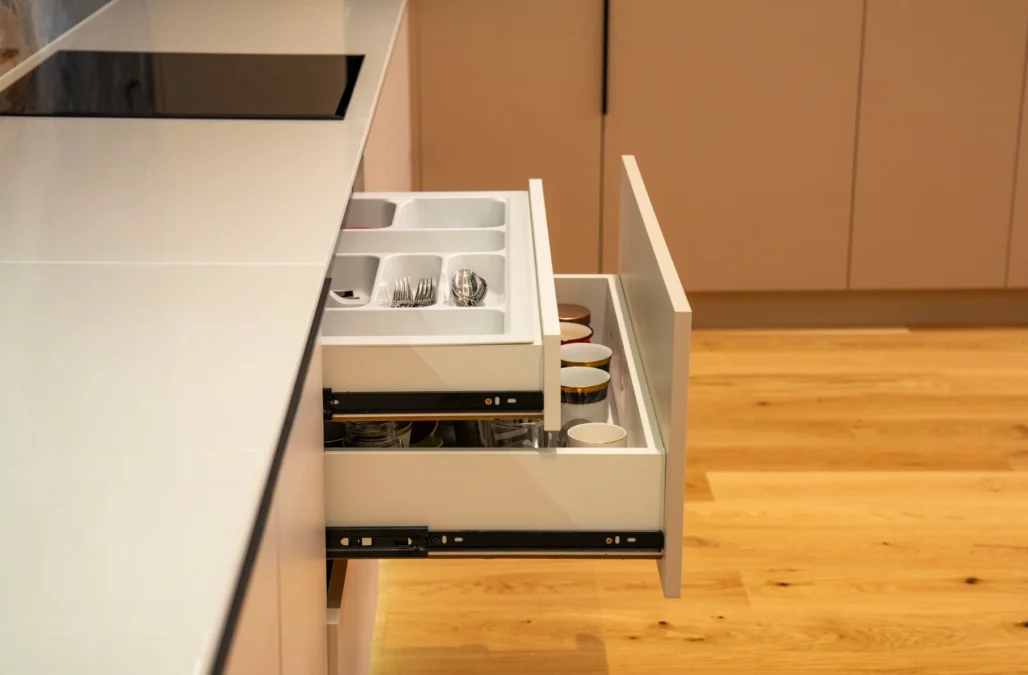
To organize a kitchen junk drawer effectively: empty the drawer completely, throw away actual trash (dried-out pens, expired coupons), categorize the remaining utility items, and use modular, shallow drawer organizers to give every item a designated micro-zone. Renaming it your “utility drawer” sets a standard for what belongs inside.
For a full breakdown of kitchen zoning rules, read our master guide to organizing kitchen drawers.
Step 1: The Complete Clean-Out
Organization begins with a blank slate. Remove the drawer entirely from the kitchen cabinet if possible. Empty the contents onto a clear countertop or dining table. Vacuum the inside of the drawer to remove dust and crumbs, and wipe it down with a mild all-purpose cleaner. Place a non-slip shelf liner at the bottom to prevent organizers from sliding when the drawer opens and closes.
Step 2: Ruthless Decluttering (Keep, Relocate, Toss)
A junk drawer should not be a graveyard for items without a home. It should be a highly functional utility space for items you reach for weekly in the kitchen.
| Keep (Utility Essentials) | Relocate (Belongs Elsewhere) | Toss / Recycle (True Junk) |
|---|---|---|
| Pens, a sharpie, a notepad | Tools (hammer, nails) → Toolbox | Dried-out pens & markers |
| Scissors and box cutters | Important Mail → Filing System | Expired coupons & old receipts |
| Tape, superglue, rubber bands | Spare Keys → Key hooks/lockbox | Mystery keys & broken clips |
| Flashlight and spare batteries | Loose change → Piggy bank/wallet | Takeout menus (look them up online) |
Step 3: Categorize by Function
Once you have paired down your items, group them into distinct categories. This ensures that when you shop for organizers, you know exactly what sizes you need.
- Writing & Paper: Pens, markers, sticky notes, small notepad.
- Fastening & Fixing: Tape, super glue, safety pins, rubber bands, zip ties.
- Tools & Cutting: Kitchen scissors, box cutter, mini screwdriver.
- Emergency & Utility: Small flashlight, lighter/matches, measuring tape.
Step 4: Choose the Right Organizers
The secret to a junk drawer that stays organized is modular containment. Avoid large, single-compartment trays.
- Modular Acrylic or Bamboo Bins: Purchase a set of individual, distinct bins (e.g., 3×3, 3×6, 3×9 inches). These allow you to play “Tetris” in your drawer and customize the layout.
- Adjustable Drawer Dividers: Spring-loaded dividers create custom columns. These are excellent for longer items like scissors or measuring tapes.
- Silicone Inserts: For items that tend to rattle, silicone-lined bins dampen sound and prevent sliding.
Expert Maintenance Tips
Professional organizers recommend the “one in, one out” rule. If a new utility item enters the drawer, an old or unused one must leave. Additionally, commit to a five-minute reset at the end of each month to remove stray receipts, random screws, or trash that has inevitably found its way back in.