
How to Organize Kitchen Drawers: The Master Guide (2026)

Effective kitchen drawer organization is the cornerstone of culinary efficiency and home safety. This guide provides a comprehensive framework for transforming cluttered drawers into high-functioning storage systems using industry-standard ergonomic principles and professional containment strategies.
The key to efficient kitchen drawer organization is functional zoning, where items are placed based on their frequency of use and proximity to specific workstations. By integrating NKBA ergonomic standards with precise modular containment, users can reduce physical strain and streamline meal preparation.
Comprehensive Organization Distinctions Matrix
| Criteria | Standard/Beginner Approach | Professional/Advanced Approach |
|---|---|---|
| Strategy & Systems | Generic “tidy up” tips and pre-made insert trays. | NKBA 5-zone framework, NAPO protocols, and custom modular grid systems with soft-close slide upgrades (Blum/Rev-a-Shelf). |
| Budget & Solutions | Tension spring dividers under $15; 15-minute quick purge. | Solid walnut in-drawer docks, custom pull-outs, and heavy-duty drawer glide installations. |
| Durability & Materials | Clear plastic/acrylic (can scratch or warp near heat). | FSC carbonized bamboo (handles load better) or hardwood with periodic conditioning. |
| Circumstance | Renters with non-alterable drawers; small galley kitchens. | Homeowners with custom cabinetry; large island kitchens. |
Evidence-Based Facts vs. Common Myths
- Myth: “Stacking pots saves space.” Fact: Vertical storage on edge prevents structural wear, chipping, and lower back torque.
- Myth: “Clear plastic is always best.” Fact: Acrylic scratches and warps near heat; carbonized bamboo handles load better.
Key Evidence-Based Principles:
- Proximity over Aesthetics: Store items exactly where the task occurs (e.g., knives in the Prep Zone).
- Vertical Clearance Optimization: Utilize the full height of drawers with tiered or stackable modular inserts.
- Load Bearing Compliance: Ensure heavy cookware is stored in drawers with appropriate slide weight ratings to prevent hardware failure.
The 5-Step System for Drawer Organization
1. Purge & Inventory
Empty every drawer completely. Group items by category and frequency of use. Discard damaged tools, donate duplicates, and relocate non-kitchen items.
2. Precise 3D Measurement & Hardware Clearance Math
Measure the internal width, depth, and height of every drawer. Take note of “clearance height”—the space between the drawer bottom and the cabinet frame—to ensure organizers do not obstruct movement.
When measuring vertical drawer depth for bakeware and casseroles, keep standard vessel dimensions in mind—such as the dimensions of a standard 2-quart baking dish—to ensure handles clear drawer glides
3. NKBA Zone Mapping
Assign each drawer to a specific functional zone (Prep, Cooking, Cleaning, Consumables, or Non-Consumables) to minimize unnecessary movement across the kitchen floor plan.
4. Modular Containment & Non-Slip Anchoring
Select dividers or bins that fit the exact dimensions. Avoid “one size fits all” solutions; instead, use adjustable or individual modular units to maximize every square inch.
5. Maintenance Protocols
Establish a quarterly audit. Re-evaluate zones every six months to adjust for changing cooking habits or new tool acquisitions. Drawer organization around the wet zone should always align with kitchen hygiene; learn how to properly clean and disinfect a kitchen sink to prevent moisture and bacteria buildup near lower cabinetry.”
NKBA 5-Zone Functional Mapping & Ergonomic Principles
The National Kitchen & Bath Association (NKBA) recommends a five-zone approach to maximize ergonomics and safety.
| Zone | Primary Function | Ideal Drawer Contents |
|---|---|---|
| Prep Zone | Food preparation and cutting | Knives, cutting boards, mixing bowls, peelers. |
| Cooking Zone | Active cooking at the range | Spatulas, ladles, thermometers, pot holders. |
| Cleaning Zone | Sanitation and cleanup | Dish towels, sponges, trash bags, detergents. |
| Consumables Zone | Food storage | Spices, wraps, storage bags, dry goods. |
| Non-Consumables | Service and plating | Silverware, plates, napkins, serving pieces. |
Comprehensive Category-by-Category Drawer Guide
Silverware & Cutlery Drawers
Utilize expandable dividers to prevent shifting. Store everyday cutlery in the uppermost drawer of the Non-Consumables zone. Use non-slip liners to keep dividers in place.
In-Drawer Knife Storage & Blade Safety
“For safety and blade longevity, use dedicated knife docks or slotted inserts (see our complete breakdown on the best way to store knives for blade protection and hygiene). This prevents edge degradation and protects fingers from accidental cuts. Ensure the dock is positioned in the Prep Zone.”
Cooking Utensils & High-Heat Prep Tools
Deep drawers are ideal for bulky items like whisks and potato mashers. Use diagonal dividers for extra-long tools that do not fit horizontally or vertically.
Deep Drawers for Pots, Pans, & Lids
Ensure these drawers are equipped with heavy-duty slides. Check the slide weight rating (typically 75lb, 100lb, or 150lb). Use vertical peg systems or adjustable dividers to store pot lids upright and prevent ‘piling’ or glass breakage.
Spice Drawer Organization
Protect spices from heat and light by storing them in a drawer away from the oven. Use tiered inserts to allow for easy label viewing without digging.
Food Storage Bags & Wraps
Relocate bulky cardboard boxes to a dedicated drawer. Use bamboo or acrylic dispensers for foil, plastic wrap, and snack bags to create a uniform, stackable system.
Junk & Household Utility Drawers
Limit this to one small drawer. Use micro-compartments for batteries (ensuring terminals are covered for safety), tape, and small tools. Audit monthly. To prevent miscellaneous household utility items from overflowing into your food prep zones, establish a strict containment strategy for batteries, tape, and tools. Read our detailed kitchen junk drawer organization guide for modular bin setups and decluttering rules.
Kitchen Linens & Towel Organization
Apply the “File Folding” method or “Rolling” technique. This allows you to see every towel at a glance and prevents the “stack collapse” when pulling from the bottom.
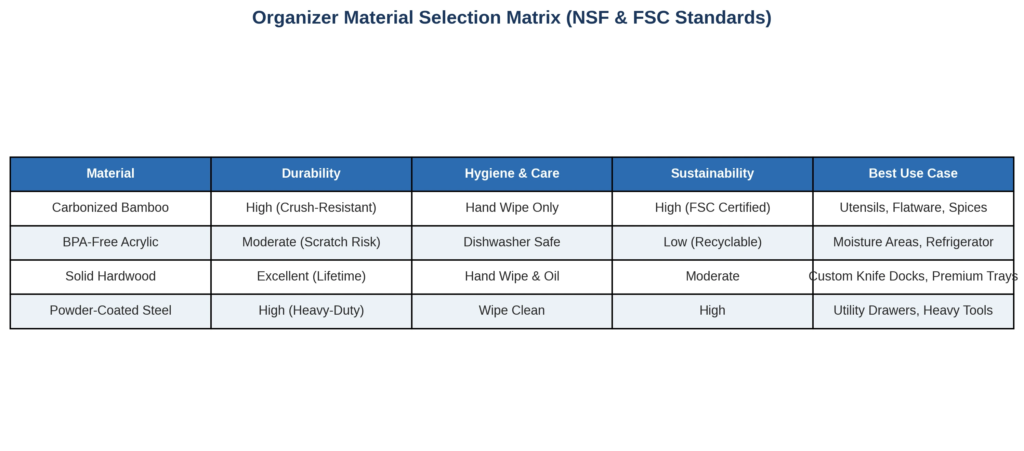
Material & Hardware Selection Guide
- Bamboo: Eco-friendly, naturally antimicrobial, and aesthetically warm. Look for FSC certification to ensure sustainable sourcing.
- Acrylic: Best for visibility and ease of cleaning. Ensure it is BPA-free.
- Hardwood: Offers a premium, custom-built look but requires periodic conditioning.
- Steel: High durability and industrial aesthetic. Ideal for heavy utility drawers.
- Safety Standards: Only use materials that meet NSF Food Safety standards for items coming into direct contact with food-contact surfaces.
Physical Health, Ergonomics, Hygiene & Safety Disclaimer
Always adhere to weight limits specified by the cabinet manufacturer to avoid slide failure or cabinet tipping. For ergonomics and to prevent repetitive motion strain (RSI) or lumbar lifting mechanics issues, store heaviest items between waist and knee height. Ensure all materials meet NSF Sanitation standards and use non-toxic food-contact surfaces. Consult OSHA for ergonomic lifting and blade safety guidelines.
Frequently Asked Questions
How do I stop my drawer organizers from sliding?
Use museum gel, adhesive “bumpons,” or high-quality non-slip silicone liners to secure modular bins and prevent shifting during normal drawer operation.
What is the best way to store lids?
Vertical tension rods or dedicated wire lid racks inside a deep drawer keep lids upright, reduce clutter and noise, and make them easier to access without stacking.
Should I use individual bins or one large divider?
Individual modular bins provide the greatest flexibility for oddly shaped drawers, allow precise measurement-based layouts, and are easier to remove and clean than a single large divider.
Authoritative Research References & Links
- NSF (National Sanitation Foundation): Home Product Standards
- OSHA (Occupational Safety and Health Administration): Ergonomics and Lifting
- FSC (Forest Stewardship Council): Sustainable Wood Standards
- NAPO (National Association of Productivity & Organizing Professionals): Organizing Best Practices
2 Comments
Comments are closed.